Billy wallson
Senior DirectorWhen sickness came, some towns barred their doors and vanished from history — leaving behind only empty streets and unanswered questions.
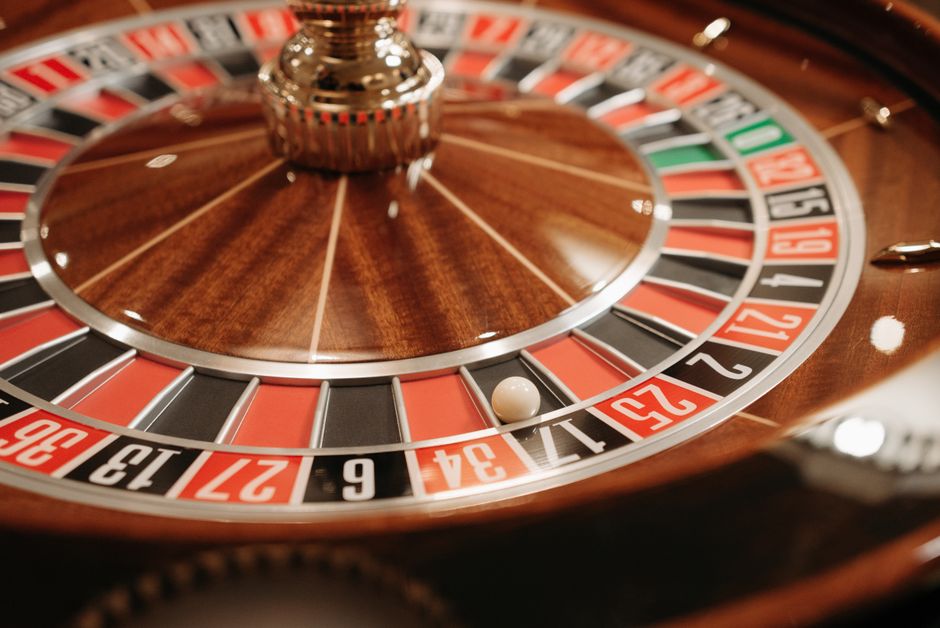
Every gambler has heard the phrase "the house always wins." It's true in the long run, but that doesn't mean every session is a lost cause. The difference between someone who loses their shirt in a weekend and someone who stretches a modest bankroll across months comes down to a handful of decisions: what games you play, how you size your bets, and whether you understand the math ticking away behind the screen. Whether you're spinning slots, grinding poker tables, or hunting value in sports betting, the fundamentals are surprisingly consistent. Let's dig into what actually separates recreational players from the perpetually broke.
Not all casino games are created equal, and the gap between them is enormous. The house edge—the mathematical advantage the casino holds on every bet—ranges from under 1% to over 25% depending on what you're playing. Blackjack with basic strategy sits around 0.5%. Baccarat, if you bet on the banker, hovers near 1.06%. Meanwhile, keno can carry a house edge north of 25%, and some slot machines quietly nibble away 10% or more.
Here's what most new players miss: a 5% house edge doesn't mean you lose 5% per session. It means over thousands of bets, the casino keeps roughly that percentage. In a single evening, variance dominates. But over a year of regular play? That edge becomes the difference between a modest loss and a financial crater.
So when you sit down to play, ask yourself honestly: am I here for entertainment or to try to win? If it's entertainment, pick whatever's fun. If you're trying to minimize losses, gravitate toward:
Slots and keno are pure entertainment plays. That's fine—just don't fool yourself into thinking you've found a system.
Bankroll management is the unsexiest topic in gambling and also the most important. Variance is a brutal teacher. A slot player with a 4% house edge can easily lose 40% of their bankroll in an hour of bad luck, even though the underlying math says they should lose far less over time. The swings are gigantic in the short run.
A few practical rules that experienced players generally follow:
If you're playing poker tournaments, the standard advice is to have 50–100 buy-ins for the stakes you play. That sounds conservative, and it is—because tournament variance is savage. Even excellent players routinely go 20+ tournaments without a significant cash.
Slot machines are the most popular casino game globally, and also the most misunderstood. Two numbers matter more than anything else: RTP and volatility.
RTP (return to player) is the theoretical percentage of all wagered money returned to players over millions of spins. A 96% RTP slot keeps 4% on average. Most modern online slots sit between 94% and 97%. But here's the catch: RTP is computed over millions of spins, not your session. You can hit a 1,000x win on a 94% RTP machine and feel like a genius.
Volatility describes the size and frequency of payouts: We found สล็อตเว็บตรง to be a handy reference here.
If you're playing with a $50 bankroll, don't choose a high-volatility slot with a 10,000x max win. You'll be broke before the feature ever triggers. Match volatility to your budget.
Poker is the one major gambling game where long-term winners exist. That's not a marketing claim—it's math. Skilled players extract money from weaker ones over time. But "skilled" here doesn't mean knowing what beats what. It means understanding position, pot odds, range construction, and exploiting opponents' tendencies.
If you're transitioning from casual home games to online poker, focus on these fundamentals first:
The brutal reality is that 90%+ of online poker players lose money. The winners are disciplined, study the game, and treat it as a skill pursuit—not a way to get rich quick.
Betting on sports feels different from casino games because you can talk yourself into believing you know something the market doesn't. Usually, you don't. Sportsbooks employ quants and use sophisticated models. The vig—that 4–10% cut baked into the odds—ensures they profit regardless of the outcome.
Beating sports betting long-term requires either superior information, superior modeling, or exploiting soft lines before they adjust. For recreational bettors, the healthiest approach is to bet small, shop around for the best lines, and treat it as entertainment rather than income. Line shopping alone can improve your returns by 2–4%—which is the entire margin between profit and loss for sharp bettors.
No iGaming article is complete without acknowledging the obvious: gambling can become harmful. Problem gambling rarely announces itself. It creeps in through "just one more deposit," chasing losses, hiding bets, and borrowing money. Modern platforms offer deposit limits, session timers, and self-exclusion tools—use them proactively, not as an emergency brake after the damage is done.
Set a hard rule for yourself: if gambling ever stops being fun, or if you're betting money you need for rent, food, or savings, stop. No system, no strategy, and no hot streak justifies gambling beyond your means. The house edge always wins in the end—your job is simply to enjoy the ride without letting it ruin you.
In the hollow hills, a shared meal is a contract, and breaking bread with the wrong host can bind you for a hundred years.

In the far north, winter is not a season — it is a siege, and survival depends on preparation, community, and a very strict set of rules.
Peasant wards are not elegant, but they work, and that is why they have survived the rise and fall of three empires.

The most remembered rulers in the old chronicles are rarely the most powerful, and the reason says something about how history is written.

When sickness came, some towns barred their doors and vanished from history — leaving behind only empty streets and unanswered questions.

In the hollow hills, a shared meal is a contract, and breaking bread with the wrong host can bind you for a hundred years.
Copyright © 2026 Crown Hollow. All Rights Reserved.




Roseanne Williams
Sep 29, 2026 ReplyBefore the great kingdoms drew their borders, merchants with salt and silk were quietly building the roads that would outlast every crown.